
Roland Garros 2026 shocks: who turned the men’s draw upside down
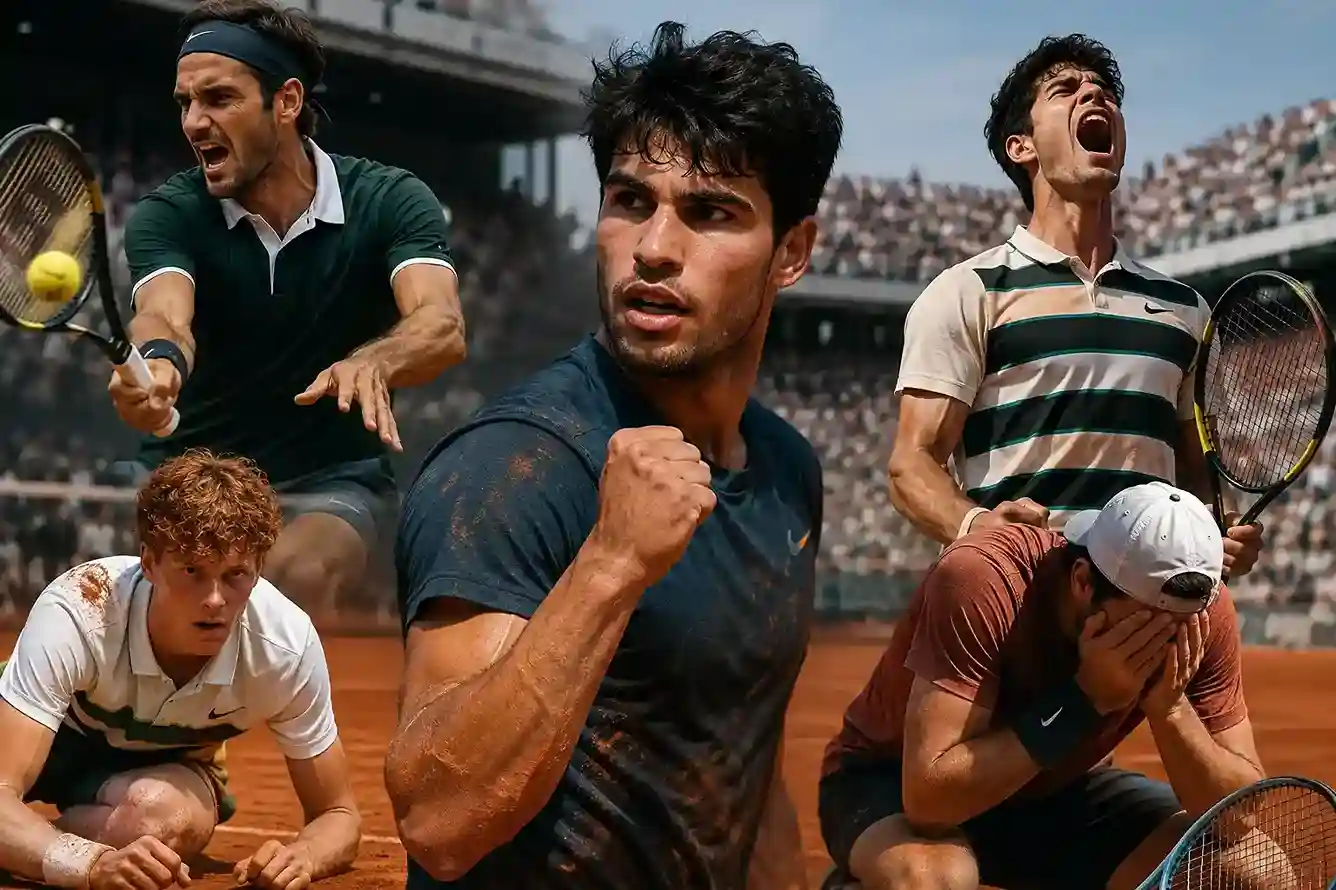
Roland Garros 2026 has felt less like a slow march toward an expected final and more like a series of trapdoors opening under the biggest names in men’s tennis. Before the event even settled into rhythm, the men’s draw had already lost its defending champion, Carlos Alcaraz, who withdrew with a wrist injury, and then it lost its top seed, Jannik Sinner, in one of the wildest collapses Paris has seen in years. By the time the semifinal lineup was set on June 5, the tournament had transformed into something even rarer: a Grand Slam in which the usual order did not bend but broke.
That is why this edition has been so compelling. The shocks were not random accidents scattered through the bracket. They changed the geometry of the whole event. Some upsets blew apart the top half, some cleared emotional and tactical pathways for younger contenders, and some announced that the next wave is not waiting politely for its turn. It is taking space now. The names that truly flipped the men’s draw were not all semifinalists, but each of them altered the tournament’s logic: Juan Manuel Cerundolo, Joao Fonseca, Jakub Mensik, Rafael Jodar, Matteo Arnaldi, Flavio Cobolli, and, in an earlier but still important way, Nishesh Basavareddy and Raphael Collignon.
The First Crack: Sinner’s Collapse Changed Everything
The most important upset in the entire men’s draw came early, and it came with a sense of disbelief. Jannik Sinner arrived in Paris as the world No. 1 and, with Alcaraz absent, the clear favorite on paper. Then Juan Manuel Cerundolo dragged him into one of the strangest reversals of the season. Sinner led 6-3, 6-2, 5-1 in the second round, only to lose in five sets. Olympics.com described it as Sinner’s first defeat in 31 matches, and the scale of the collapse instantly changed the tone of the tournament from orderly to chaotic.
This was not only a shocking scoreline. It was the kind of upset that changes how every player still alive begins to think. Until that match, the draw still had a center of gravity. Sinner’s presence forced everyone else to imagine a likely meeting with the strongest baseline machine in the sport. Once he was gone, the upper half no longer belonged to a dominant favorite. It became negotiable. Belief spread through the locker room. Players who had entered Paris hoping for a quarterfinal suddenly had reason to think about a semifinal or even more.
Cerundolo deserves more than a footnote here because his win was not merely symbolic. He exposed something tennis people often talk about but do not always see so clearly: when a heavy favorite loses physical sharpness or emotional control on clay, the court gives the underdog time to keep asking the same hard question. Cerundolo stayed there, made one more rally, one more return, one more stretch of pressure, until the impossible became real. That single result did not decide the champion, but it removed the man many assumed would be standing there on the final Sunday.
The ripple effect was immediate. Félix Auger-Aliassime, Flavio Cobolli, Matteo Berrettini, Matteo Arnaldi, and others suddenly found themselves in a section with opportunity rather than fear. Even players outside that quarter could feel it. A major draw behaves differently once the biggest obstacle vanishes, and Paris 2026 became a tournament of ambition instead of caution almost overnight.
Joao Fonseca’s Win Over Djokovic Was The Tournament’s Loudest Statement
If Cerundolo cracked the draw open, Joao Fonseca blew it apart. His five-set win over Novak Djokovic in the third round was the upset that turned a wild event into a generational one. According to AP, the 19-year-old Brazilian beat Djokovic 4-6, 4-6, 6-3, 7-5, 7-5, becoming only the second player to beat Djokovic in a Grand Slam after trailing by two sets. The same result also ensured that the tournament would crown a new men’s Grand Slam champion.
That is why Fonseca’s victory matters beyond the highlight reel. Djokovic was not just a famous name in the draw. He was the last living bridge to the old order, the player who could still impose history on a chaotic field. Remove him, and the emotional weight of the event changes immediately. Matches stop being about whether a rising player can dare to dream. They start becoming auditions for leadership. Fonseca’s win told the field that reputation would not protect anyone in Paris this year.
The nature of the victory made it even more powerful. Fonseca did not sneak past a compromised legend in straight sets on an off day. He survived being down two sets, handled the pressure of the biggest moment of his career, and finished with the composure of someone far older. That matters in a major because the draw does not open for players who cannot manage their own heartbeat. Fonseca showed that he could.
He then backed it up by beating Casper Ruud, a two-time Roland Garros finalist, to reach the quarterfinals. ATP Tour noted that he combined his heavy forehand with strong defense to beat one of the most reliable clay-court names in the field. That second win is crucial to understanding who truly flipped this draw. The upset over Djokovic was seismic, but the follow-up over Ruud proved it was not just a single electric night. Fonseca changed two rounds of the tournament and removed both a legend and a clay specialist from the path.
The New Faces Who Took Over The Bracket
The best way to understand Roland Garros 2026 is to look at how many emerging players stopped being side stories and became structural forces in the draw. Jakub Mensik, Rafael Jodar, Matteo Arnaldi, and Flavio Cobolli each did that in a different way, and together they made the semifinal lineup feel like the beginning of a new map rather than the end of the old one.
Mensik’s role is especially interesting because he became the man who stopped the hottest story in the tournament. ATP Tour reported that the Czech beat Fonseca in the quarterfinals, converting his seventh match point and using his serve brilliantly under pressure. That result can be overshadowed because Fonseca had already produced the louder headlines, but it was a major draw-flipping moment in its own right. Once Mensik beat the player who had taken out Djokovic and Ruud, he inherited the charge of the tournament. He turned himself from contender into finalist material.
Rafael Jodar did something different. He did not reach the semifinals, but he reshaped the lower half by announcing himself as a serious clay-court force. ATP Tour reported that he came back from two sets down against Pablo Carreno Busta to reach the quarterfinals on his Roland Garros debut, becoming just the sixth man since 2000 to make the quarterfinals in Paris on debut. In another event that might have felt like a charming breakout. In this one, it was another reminder that established order was under assault from every direction.
Matteo Arnaldi’s route was more rugged and less glamorous, which is often how real Grand Slam runs look. ATP Tour detailed his comeback from the brink against Frances Tiafoe in the fourth round, a dramatic escape that pushed him into his first major quarterfinal. Then Roland Garros’ official site recorded that he reached the semifinals when Matteo Berrettini retired injured with Arnaldi leading 7-5, 5-2. The retirement was unfortunate, but Arnaldi had already earned the right to be in that position by surviving long, difficult matches in the earlier rounds, including a win over Stefanos Tsitsipas noted on his tournament profile.
Cobolli’s rise has perhaps been the cleanest. ATP Tour reported that he came from a set and a break down to beat Félix Auger-Aliassime in the quarterfinals and reach his first Grand Slam semifinal. That win mattered because Auger-Aliassime, as one of the highest seeds left in the weakened top half, represented a more conventional route back to order. Cobolli refused that correction. He kept the draw tilted toward fresh blood and helped create the first all-Italian men’s Grand Slam semifinal in the Open era at Roland Garros.
A quick look at the tournament’s turning points makes the scale of the chaos easier to see.
| Player | Shock Result | Why It Mattered |
|---|---|---|
| Juan Manuel Cerundolo | Beat No. 1 Jannik Sinner from two sets down after Sinner led 6-3, 6-2, 5-1. | Removed the favorite and made the draw feel open to everyone. |
| Joao Fonseca | Beat Novak Djokovic in five sets from two sets down. | Eliminated the last former men’s major champion in the field and turned belief into chaos. |
| Joao Fonseca | Beat Casper Ruud in the fourth round. | Took out one of the most proven clay-court contenders left in the draw. |
| Jakub Mensik | Beat Fonseca in the quarterfinals. | Ended the hottest run in the event and claimed the momentum for himself. |
| Rafael Jodar | Came back from two sets down to beat Pablo Carreno Busta and reach the quarterfinals on debut. | Showed that another teenager could destabilize the bracket from the bottom half. |
| Matteo Arnaldi | Came back to beat Frances Tiafoe, then advanced to the semis after Berrettini retired. | Turned endurance and persistence into a career-best major run. |
| Flavio Cobolli | Beat Félix Auger-Aliassime after trailing by a set and a break. | Prevented the draw from snapping back toward the highest remaining seed in that section. |
What stands out in that list is not just the number of surprises but the quality of their consequences. Some upsets are noisy and then fade. These ones kept redirecting the bracket, round after round, until the semifinal field itself looked like a manifesto for change.
The Early Casualties That Made Paris Feel Unstable
Long before the semifinal picture was complete, there were warning signs that this Roland Garros would not respect rankings. Nishesh Basavareddy’s first-round win over seventh seed Taylor Fritz was the opening alarm. Roland Garros called it the first major upset of the tournament, noting that the 21-year-old wild card, ranked No. 148, beat Fritz in four sets. That result mattered because top-10 exits on the first day change the emotional climate of a Slam. Suddenly every seeded player in the locker room understands that the surface, the conditions, and the mood of the event are not working in familiar ways.
Raphael Collignon’s straight-sets win over fifth seed Ben Shelton reinforced the same point. The official Roland Garros site said Collignon ensured that only one top-eight seed remained in a wide-open top half, while ATP Tour highlighted it as the first top-five win of his career. Shelton is the kind of player who can impose himself physically and emotionally, especially when his serve starts dictating terms. For Collignon to dismiss him so cleanly suggested that this tournament was becoming a place where rhythm, discipline, and timing could outrun status.
Those early shocks did not produce semifinalists, but they mattered because they softened the structure around the bigger names. A major draw is not only altered by headline upsets at the very top. It is also altered by the disappearance of dangerous seeds who might have blocked a run, changed a matchup, or forced a more seasoned contender into a draining battle. Basavareddy and Collignon helped create a tournament atmosphere in which nobody could assume the next round would restore normality.
You could feel the effect in how later matches were discussed. Instead of asking whether outsiders could make noise, the conversation shifted to which outsider had the game to keep going. That is a subtle difference, but it is the sign of a draw that has already been overturned. Paris was no longer waiting for the favorites to reassert themselves. It was waiting to see which new face would prove most durable.
The players who most clearly changed the men’s bracket can be grouped this way:
- Cerundolo, because he removed Sinner and erased the event’s central favorite.
- Fonseca, because he beat Djokovic and Ruud, turning possibility into a full rebellion.
- Mensik, because he stopped the rebellion’s brightest star and seized the road to the final.
- Jodar, Arnaldi, and Cobolli, because they made the bottom half younger, less predictable, and far more volatile than the seedings suggested.
- Basavareddy and Collignon, because they helped destabilize the early rounds and announced that Paris would punish any player who expected protection from his ranking.
That group tells the real story of the event. The tournament was not flipped by one upset alone. It was turned inside out by a sequence of results that kept passing momentum from one fresh name to another.
Why These Upsets Were Not Just Random
Calling Roland Garros 2026 chaotic is accurate, but calling it random would miss the point. Several patterns connect these results. One is physical strain. The tournament has been played in harsh conditions, and the Sinner collapse is the clearest example of how even elite front-runners could become vulnerable when matches turned longer and heavier. Another is the strength of the younger generation’s first-strike tennis. Fonseca, Mensik, and Jodar are not clay specialists in the old-fashioned sense. They bring pace, nerve, and a willingness to attack under pressure. Paris rewarded that more than some expected.
There is also a psychological element. Once Alcaraz withdrew and Sinner fell, the tournament lost its twin poles of certainty. That changed not just matchups but imagination. In men’s tennis, belief is often the last barrier. Players ranked outside the very top tier may have the shots, the movement, and the fitness, but they still need an event that feels open enough to invite ambition. Roland Garros 2026 became exactly that kind of event.
The semifinal lineup captured this perfectly. As of June 5, it featured Alexander Zverev against Jakub Mensik and Matteo Arnaldi against Flavio Cobolli. ATP Tour and official Roland Garros reporting confirm the paths that built those matchups, with Zverev beating Jodar in the quarters, Mensik beating Fonseca, Cobolli beating Auger-Aliassime, and Arnaldi arriving via his comeback work and Berrettini’s retirement. It is a semifinal field that would have seemed bold in a fantasy bracket two weeks earlier, and yet by now it feels earned rather than accidental.
What The Men’s Draw Really Says About 2026
The biggest lesson from Roland Garros 2026 is not merely that favorites can lose. That has always been true. The deeper lesson is that men’s tennis has entered a phase where a single upset can unlock an entire generation waiting behind it. Cerundolo shocked the world by removing Sinner. Fonseca electrified the event by taking out Djokovic and Ruud. Mensik then showed that the new wave is not a one-man movement. Jodar, Arnaldi, and Cobolli added even more proof that the bracket was no longer controlled by familiar hierarchies.
So who really turned the men’s draw upside down? The shortest answer is this: Cerundolo started the earthquake, Fonseca made it impossible to ignore, and the cluster of Mensik, Jodar, Arnaldi, and Cobolli ensured that the bracket never returned to its original shape. If one name deserves the label of chief disruptor, it is probably Fonseca because his wins carried the greatest emotional charge and removed the tournament’s biggest surviving legend. But without Cerundolo’s upset of Sinner, the draw would never have become this unstable in the first place.
That is what makes Roland Garros 2026 so memorable already. It has not just produced surprises. It has revealed a sport in transition, where reputation still matters, but no longer guarantees safety, and where the next generation no longer looks like a promise for tomorrow. In Paris, it has looked ready for today