
Main Storylines For US Open 2026: stars, comebacks and upset chances
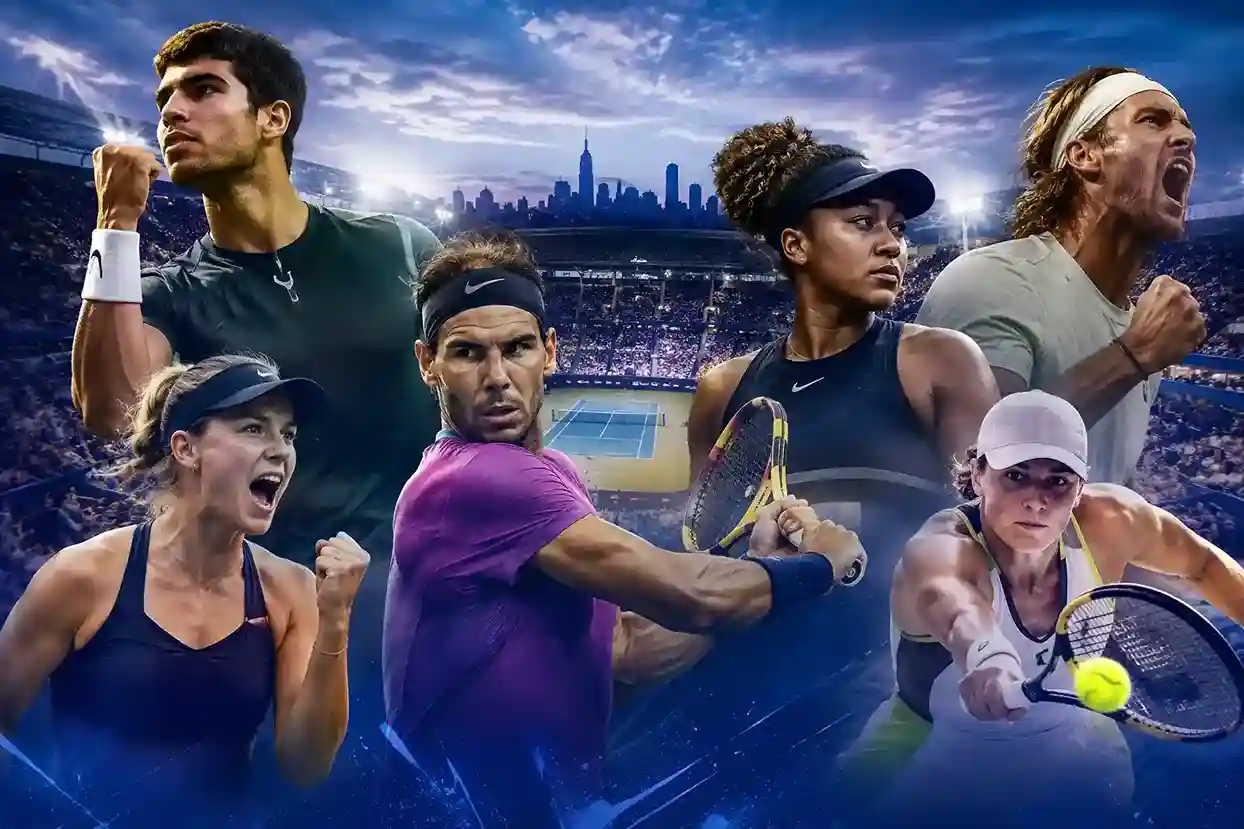
The 2026 US Open is still months away, but the shape of the tournament is already becoming fascinating. The event itself has expanded again, with the full US Open running from August 23 to September 13 and the singles main draw starting on August 30, which gives this edition an even larger stage and a longer buildup than usual. That matters because the current tennis season has already produced sharp swings in form, injury interruptions, surprise breakthroughs and a few names who suddenly feel much more dangerous on hard courts than they did at the start of the year.
Why This US Open Already Feels Different
A Grand Slam becomes especially compelling when the established order looks strong without feeling fixed. That is exactly where the sport sits in early June. On the men’s side, Jannik Sinner is the world No. 1 and has put together one of the most impressive stretches of the season, including a run that ATP itself describes as historically significant, with five straight Masters 1000 titles and a Career Golden Masters completed in Rome. On the women’s side, Aryna Sabalenka remains world No. 1, but the field behind her is crowded with players who either own major-winning experience or are now close enough in level to believe they can break a Slam draw open.
That combination creates the right kind of tension for New York. The favorites are real favorites, not names included out of habit. At the same time, the gap between the top tier and the next wave does not look especially wide. Coco Gauff, Iga Swiatek, Mirra Andreeva and Victoria Mboko all arrive with plausible reasons to think they can make a deep run, while the men’s draw has more volatility beneath Sinner than the ranking table alone suggests. Ben Shelton has pushed himself into the upper bracket of the ATP rankings, Learner Tien has already jumped into the Top 20, and Joao Fonseca has shown the kind of shotmaking that can turn a major into chaos.
There is also the simple fact that New York rewards conviction. The US Open is not always won by the most complete player over the full calendar year. It often goes to the player who handles noise, night sessions, momentum shifts and the emotional speed of the event better than everyone else. That is why this year’s story is bigger than rankings. It is about who can impose a style under pressure, who can rediscover belief after a disrupted stretch, and who can catch fire quickly enough to become the tournament’s defining surprise.
The Biggest Stars: who should command the spotlight
Sinner enters any discussion as the central men’s figure. The official ATP ranking has him well clear at No. 1, and the broader season narrative supports that standing. His 2026 campaign has included landmark success at the Masters level, and ATP analysis has pointed to major improvements in his serve, which is an important detail for hard-court majors. The old version of Sinner could sometimes be dragged into long physical exchanges even when he was controlling rallies. The current version appears more efficient. That makes him especially dangerous in New York, where conserving energy through the first week often matters as much as peak quality.
Carlos Alcaraz would normally stand shoulder to shoulder with him as a co-headliner, and in pure tennis terms he still does. The issue is health. ATP reported that he withdrew from Madrid, Rome, Roland Garros, Queen’s Club and Wimbledon because of a wrist injury, even though he had opened the season with a strong 22-3 record. That makes him one of the most compelling names in the entire tournament buildup. If he is fully fit by late August, he is not just a contender but one of the few players with the imagination and explosive transition game to overwhelm New York from the baseline forward. If he is short of rhythm, every round becomes more interesting.
Djokovic belongs in this section for different reasons. He is no longer carrying the sport in the way he once did, but he remains too accomplished to be treated like a nostalgic subplot. ATP reported that he returned in Rome after more than six weeks out due to injury, and he was still ranked No. 4 entering that period. At the US Open, that matters because his match management, return quality and ability to expose nerves remain elite weapons even when his schedule is lighter and his body less predictable. His presence changes the emotional temperature of a draw. Younger contenders may no longer fear him in the abstract, but they still know that beating him over five sets on a big court is different from beating him in theory.
On the women’s side, Sabalenka remains the obvious standard. She is the reigning world No. 1 and the defending US Open champion after lifting the 2025 title in New York. Her power translates naturally to the event, but what makes her especially important in 2026 is that she no longer feels like a player living only on aggression. Even recent defeats have come deep in majors, not at the edges of them. She will arrive with the clearest combination of ranking authority, recent Slam relevance and proven comfort on the biggest hard-court stage in the women’s game.
Gauff and Swiatek remain essential to the women’s story even though their routes into New York feel different. Gauff’s WTA profile shows she is ranked No. 4 and already owns major titles at Roland Garros and the US Open, while Swiatek sits at No. 3 with the pedigree of a former world No. 1 and one of the era’s most complete competitors. Gauff still looks like one of the best athletes in the sport and one of the most natural hard-court fighters in tense matches. Swiatek, meanwhile, may arrive with slightly less noise around her than in earlier seasons, which could actually suit her. The US Open has often been the Slam where emotional balance matters most, and both are capable of going very deep if their serving weeks are clean.
The Return Stories: players who could reshape the draw
The most obvious comeback story is Alcaraz, because the question is not whether he belongs among the elite but whether he can reach New York with enough match volume to feel like himself again. Wrist injuries are especially awkward for aggressive players whose games depend on improvisation, reaction speed and confidence on the forehand. That is why his status could end up deciding the tone of the whole men’s draw. A fully restored Alcaraz turns the event into a heavyweight battle. A compromised Alcaraz turns the lower half of the bracket into a land rush.
Djokovic is another kind of return story. His issue is not rebuilding a career but proving he can still peak at the exact weeks that matter most. ATP’s recent updates made clear that he missed more than six weeks before coming back in Rome, and that sort of interruption becomes harder to absorb at this stage of a career. Yet the US Open has always rewarded veterans who understand pacing, recovery and emotional economy. He does not need to dominate the summer to become dangerous in New York. He needs enough healthy matches to trust his movement and enough serving days to shorten pressure moments.
Naomi Osaka feels like the women’s version of this story, though her trajectory is more open-ended. WTA coverage in 2026 has already framed the season around the question of whether she can return to Grand Slam glory, and her run to the second week at Roland Garros, followed by a quarterfinal loss to Sabalenka, was an encouraging sign because clay has never been the surface most closely associated with her best major work. That matters for the US Open because New York is where her biggest hard-court instincts have historically looked most natural. If she arrives healthy and serving well, she is exactly the type of unseeded or awkwardly seeded opponent that can distort an entire section of the draw.
There is also a quieter category of return that matters in majors: the return to relevance. Madison Keys belongs there, not because she disappeared, but because major champions often spend months proving that one breakthrough was not an isolated moment. WTA’s own 2026 notes linked her early-season plans to the confidence from her first Grand Slam title, and even when results have been uneven, she still looks like someone with enough first-strike tennis to be dangerous on American hard courts. At the US Open, that kind of experience can be worth almost as much as current ranking position.
Possible Sensations: the players who could blow the tournament open
Every US Open develops at least one story that looked ambitious in late spring and obvious by Labor Day. This year the list of possible disruptors is unusually rich because many of them are no longer hypothetical talents. They already own meaningful evidence.
Before the table, it helps to sort the most intriguing disruptors into a few clear categories:
• Mirra Andreeva has already reached her first Grand Slam final at Roland Garros and carried a tour-leading 34 match wins into that run, which means she is no longer just a prodigy but an actual week-to-week threat.
• Victoria Mboko has climbed to a career-high No. 9 and owns a major result line that shows real progress, including a run to the Australian Open round of 16.
• Ben Shelton has added ATP 500 titles in Dallas and Munich, proof that his game is becoming less surface-dependent and more complete.
• Learner Tien has already risen to No. 18, and ATP has openly described him as one of the brightest young stars on tour.
• Joao Fonseca has had setbacks, including injury and some early exits, but his run to the Roland Garros quarterfinals confirmed that his ceiling remains very high.
• Diana Shnaider, after stunning Sabalenka to reach her first Slam semifinal in Paris, has shown the kind of fearless shot tolerance that can make seeded players uncomfortable fast.
What makes this group so interesting is that they are dangerous in different ways. Andreeva and Mboko represent the women’s game getting younger without getting lighter. Shelton and Fonseca can make matches feel physically louder than their opponents want. Tien brings a different kind of threat: the pressure of someone whose composure makes his age easy to forget. Shnaider looks capable of the sort of hot streak that turns one upset into three.
A quick comparison makes the field easier to read:
| Player | Current signal in 2026 | Why New York could suit them | What would count as a real breakthrough |
|---|---|---|---|
| Jannik Sinner | World No. 1, historic Masters run | Efficient hard-court aggression and improved serve | Winning the title as the clear favorite |
| Carlos Alcaraz | Elite level, but managing a wrist injury layoff | Variety, speed and crowd energy | Returning healthy enough to make the final |
| Aryna Sabalenka | World No. 1 and defending US Open champion | Flat power and proven success on big hard courts | Repeating as champion |
| Coco Gauff | Top-four ranking and major pedigree | Athletic defense plus home support | Reaching another New York final |
| Mirra Andreeva | First Slam final, tour-leading match wins entering Paris SF stage | Calm under pressure and fast tactical growth | First US Open semifinal or better |
| Victoria Mboko | Career-high No. 9 | Big upside, growing belief, less fear of top names | First deep Slam run in New York |
| Ben Shelton | ATP 500 titles, top-five ranking | Lefty serve, crowd connection, first-strike tennis | First US Open final |
| Learner Tien | Top-20 rise in 2026 | Smart point construction on home soil | First major quarterfinal or better |
| Joao Fonseca | Roland Garros quarterfinalist | Shotmaking that can rush opponents | Turning hype into a New York run |
| Naomi Osaka | Signs of major-level recovery in 2026 | Proven hard-court champion instincts | Returning to true title contention |
The table also shows why the tournament feels so open beneath the very top. Several players are not chasing miracles. They are chasing a result that already feels close enough to touch. Once that is true, a Slam stops being predictable.
Men’s And Women’s Draws: where the real pressure points may appear
The men’s side feels split between order and instability. Sinner is the order. Everything else depends on health, draw position and momentum. If Alcaraz is fit, the men’s event could become the cleanest rivalry major of the season. If he is not, then players such as Shelton, Zverev, Medvedev and even Djokovic begin to see an opening, while younger names like Tien and Fonseca become more than entertaining threats. The ATP rankings already show Shelton at No. 5 and Tien at No. 18, which means neither would arrive as a cute outsider. Both would arrive with enough status to expect winnable early rounds and enough firepower or poise to make a seeded section uncomfortable.
Shelton is especially intriguing in New York because his game feeds off atmosphere. He does not merely survive loud conditions; he seems to grow inside them. That has always made him dangerous at the US Open, but the 2026 version looks more rounded than the earlier one. The ATP notes around his season underline the titles in Dallas and Munich and his own claim that he has “big ambitions” on clay, which suggests a broader tactical maturity. If that growth carries into the summer hard-court stretch, he becomes one of the most credible American hopes on the men’s side.
Fonseca offers a different sort of threat. He may not yet have the week-to-week stability of the top names, but few young players can change the speed of a rally as quickly. His Roland Garros quarterfinal confirmed that his game can survive the second week of a major, not just the highlights reel. That is important because there is a big difference between being dangerous in round two and believing you belong in quarterfinal territory. New York tends to reward that mental jump.
The women’s draw may be even more volatile, because it contains both established champions and rapidly advancing challengers. Sabalenka remains the central benchmark, but Andreeva’s rise and Mboko’s climb have added fresh tension to the hierarchy. WTA data shows Mboko already at No. 9, while Andreeva entered the late stages of Paris with a tour-leading win total. Those are not decorative facts. They suggest both players are learning how to win across different weeks and different conditions, which is often the final step before a young player becomes a genuine hard-court Slam threat.
And then there is Osaka, whose importance goes beyond her ranking. She carries memory into the draw. Opponents know what her best hard-court tennis looks like, and that knowledge changes how they experience a match against her. A similar truth applies to Keys and, in a different register, to Gauff and Swiatek. The women’s bracket may be the richer story because it contains more believable champions, more plausible semifinalists and more players who can shift from vulnerable to irresistible in the span of three matches.
What Will Decide US Open 2026
The obvious answer is form, but that is only part of it. The real deciding factors should be health, serve quality and emotional control over a long, noisy fortnight. Sinner looks best placed on the men’s side because his season has already shown both dominance and efficiency. Sabalenka has the clearest women’s case because she combines ranking authority with proven US Open success. But those conclusions come with an asterisk large enough to define the tournament: if Alcaraz is truly back, if Djokovic times his peak well, if Osaka rediscovers her hardest gear, if Gauff catches the right rhythm in front of a home crowd, or if Andreeva and Mboko continue accelerating, the shape of the event changes immediately.
That is why the most interesting version of the 2026 US Open is not a simple favorites list. It is a collision between proven champions, wounded contenders and young players who no longer see the big names as distant. The tournament now has a larger calendar footprint, a longer runway and a draw likely to be full of unstable matchups. By the time the singles begin on August 30, the headlines may still belong to Sinner and Sabalenka. The deeper intrigue, though, will come from everyone trying to turn New York into their own moment.